Groundbreaking Ceremony: Meaning, Steps and Ideas
- Author: Ribbon Cutting Desk Editorial Team
- Checked by Ribbon Cutting Desk Editorial Team
- Most recently reviewed
- Posted
- In Groundbreaking
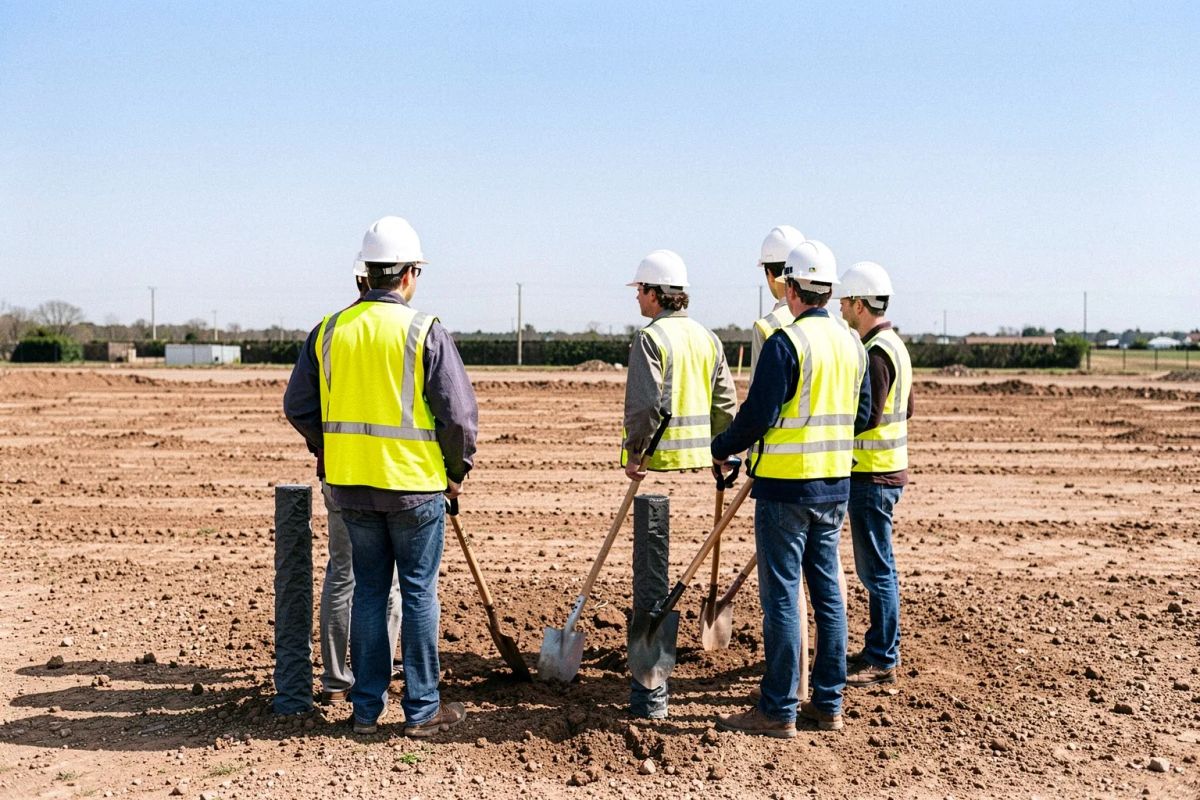
A groundbreaking ceremony is a short public event that marks the start of a building project, usually with remarks, thanks and a symbolic turning of soil by a small group. It celebrates the start; it is not the start of construction work. Guests on or near a site follow the host's and the site safety officer's rules.
General information, not legal, insurance or safety advice. Follow the site safety officer and your local rules.
Cue-checked by the Ribbon Cutting Desk team: each fact above was matched to a source this page cites.
A groundbreaking ceremony celebrates the start of a project before the building exists. This is the overview; the planning steps are in how to plan a groundbreaking ceremony, and the opening-side equivalent is the ribbon cutting guide.
What is a groundbreaking ceremony?
A groundbreaking ceremony is a public event that marks the start of a construction or development project. A host welcomes guests, a few people speak, and a small group performs a symbolic act of turning the soil together, so the project has a visible beginning that people can attend and photograph.
The ceremony is about the project and the people behind it. It is not a work session, and guests are not asked to do any construction.
Why do projects hold one?
Projects hold a groundbreaking to thank supporters, mark a date and bring the community in at the beginning. It also gives a project a first public image, which owners and funders can reuse in updates.
- Thanks. Funders, partners, designers and builders are named in public.
- Announcement. Guests hear what is being built, for whom and the expected timeline.
- Community connection. Neighbours see the site and meet the people responsible.
- A record. Photos from the day become part of the project’s history; see ribbon cutting photos for framing that carries over.
Who takes part?
A typical groundbreaking has five groups.
| Group | Role |
|---|---|
| Owner or sponsor | Hosts and gives the main remarks |
| Funders and partners | Thanked, and sometimes speak |
| Design and building team | Explain the project; the contractor controls site access |
| Officials | Give recognition and a link to the community |
| Neighbours and future users | Guests; the reason the project exists |
The contractor and the site safety officer are the ones who say where guests may stand. Involve them from the first planning conversation.
What is the typical sequence?
The sequence mirrors a ribbon cutting, with the symbolic act changed to turning the soil. As an editorial example:
- Arrival and check-in. Greeters point guests to the marked ceremony area and any safety items the host requires.
- Welcome and safety note. The host welcomes guests and gives a short safety note from the site team.
- Thanks and remarks. Two or three speakers, each short.
- Line-up. The ceremony party gathers at the marked spot.
- The turning of soil. A cue, a countdown and a symbolic turn of the soil by the group.
- Photos. A group photo, then others.
- Close. Thanks and an invitation to refreshments or a project display.
Words for steps 2 to 5 are in the sample speech wording page.
What safety and site rules do guests follow?
Guests follow the host and the site safety officer, and stay inside the marked ceremony area. OSHA describes construction as a high-hazard industry, citing hazards such as falling from rooftops, unguarded machinery and being struck by heavy construction equipment. Active-site rules come from the contractor, not from this site.
What organizers should do:
- Ask the contractor first. Confirm the date, the ceremony area and any items guests must wear.
- Keep the ceremony area away from active work. Machinery should be paused or kept clear while guests are present, as the contractor decides.
- Brief guests at the start. A short note about where to stand and where not to go.
- Mark the area with cones or tape, and put a helper at each boundary.
- Say what to wear in the invitation. Hard hats and footwear are the host’s decision; if they are required, say so and say who supplies them.
- No guest operates any equipment. The symbolic act uses a hand-held action in the marked area only.
Is the ceremony the same as the start of construction?
No. The ceremony is a symbolic beginning; construction starts on the contractor’s schedule. Permits, financing, utilities and weather decide when work begins, which may be before or after the event. If you announce a date at the ceremony, check it with the project team first.
Where should you go next?
- How to plan a groundbreaking ceremony for the program and checklist.
- Formats beyond the classic photo, covering the classic photo.
- Groundbreaking ceremony invitation for wording.
- Sample remarks and wording for each speaker.
- The ceremony program builder and the speech outline tool for fill-in help.
For weather, the National Weather Service says there is no safe place outside when thunderstorms are in the area, so agree a shelter and a decision-maker in advance. For access, the ADA says covered entities must communicate effectively with people who have communication disabilities; say in the invitation how to ask. For permits, the City of Orlando says a special event permit is required when more than 100 people attend an event on city property, with applications due at least 60 days ahead; your city may differ.
All Groundbreaking guides
- Groundbreaking Ceremony Ideas for Projects Big and Small
Groundbreaking ceremony ideas for large and small projects: classic formats, community roles, home builds, nonprofits, bad weather and safety limits.
- Groundbreaking Ceremony Invitation Wording and Samples
Groundbreaking invitation wording: what to include, formal and friendly samples, email and letter versions, site-safety and dress notes, timing and RSVP.
- Groundbreaking Ceremony Speech Examples and What to Say
Original groundbreaking speech wording: structure, welcome, why the project matters, thank-yous, the soil turn, plus 60-second and 3-minute versions.
- How to Plan a Groundbreaking Ceremony: Program and Checklist
Plan a groundbreaking ceremony: check with the contractor first, set guests, roles, site safety and access, an example program and a checklist by week.
People also ask
What is the purpose of a groundbreaking ceremony?
The purpose is to mark the start of a project in public, thank the people who made it possible and bring the community in at the beginning. It gives supporters a reason to gather and a moment to record. Many projects also use it to announce what is being built, who is building it and when people can expect to use it.
Does construction start at the ceremony?
Not necessarily. The ceremony is a symbolic start and is often held before, or separately from, the real start of work. The turning of soil is an action for guests and cameras; the contractor schedules the actual work according to permits, weather and site readiness. Check with the host before telling guests that building begins that day.
Who attends?
The usual guests are the project owner or sponsor, funders and partners, the design and building team, local officials, neighbours and sometimes press. Community groups and school or congregation members attend when the project serves them. Invite the people who made it possible and the people it will serve, and keep the number to what the site can safely hold.
How long does it last?
Plan roughly 20 to 40 minutes for the whole event, as an editorial example, with the formal program in the middle. Guests need time to arrive, collect safety items if the host requires them and move to the ceremony area. Leave time afterwards for photos and conversation, and keep remarks short on an open site.
What should guests wear?
Wear what the invitation says. Ceremonies on or near an active site may require items such as hard hats or sturdy footwear, which the host or contractor decides and may supply. If the invitation says nothing, ask the host. Dress for the weather and for walking on uneven or muddy ground, and follow the site safety officer on the day.
Is a permit needed?
Sometimes. It depends on your city, whether the site is public property and how many people attend. For example, the City of Orlando says a special event permit is required when more than 100 people attend an event on city property, with applications due at least 60 days ahead. Ask your city, the landowner and the contractor early.
Our sources
- Construction (OSHA) (osha.gov)
- Lightning Safety (National Weather Service) (weather.gov)
- Effective Communication (ADA.gov) (ada.gov)
- Events on Public Property (City of Orlando) (orlando.gov)
Related guides
- Groundbreaking Ceremony Ideas for Projects Big and Small
Groundbreaking ceremony ideas for large and small projects: classic formats, community roles, home builds, nonprofits, bad weather and safety limits.
- Groundbreaking Ceremony Invitation Wording and Samples
Groundbreaking invitation wording: what to include, formal and friendly samples, email and letter versions, site-safety and dress notes, timing and RSVP.
- Groundbreaking Ceremony Speech Examples and What to Say
Original groundbreaking speech wording: structure, welcome, why the project matters, thank-yous, the soil turn, plus 60-second and 3-minute versions.
- How to Plan a Groundbreaking Ceremony: Program and Checklist
Plan a groundbreaking ceremony: check with the contractor first, set guests, roles, site safety and access, an example program and a checklist by week.